
Eyelid Muscles
Anatomy
The eyelid is opened and closed by two types of muscles: While the levator palpebrae (lifts the eyelid) and the orbicularis oculi (closes the eyelid) are striated and voluntary, there are unstriated fibers, the tarsal muscles, which are smooth muscles and operate involuntary to widen the palpebral aperture.
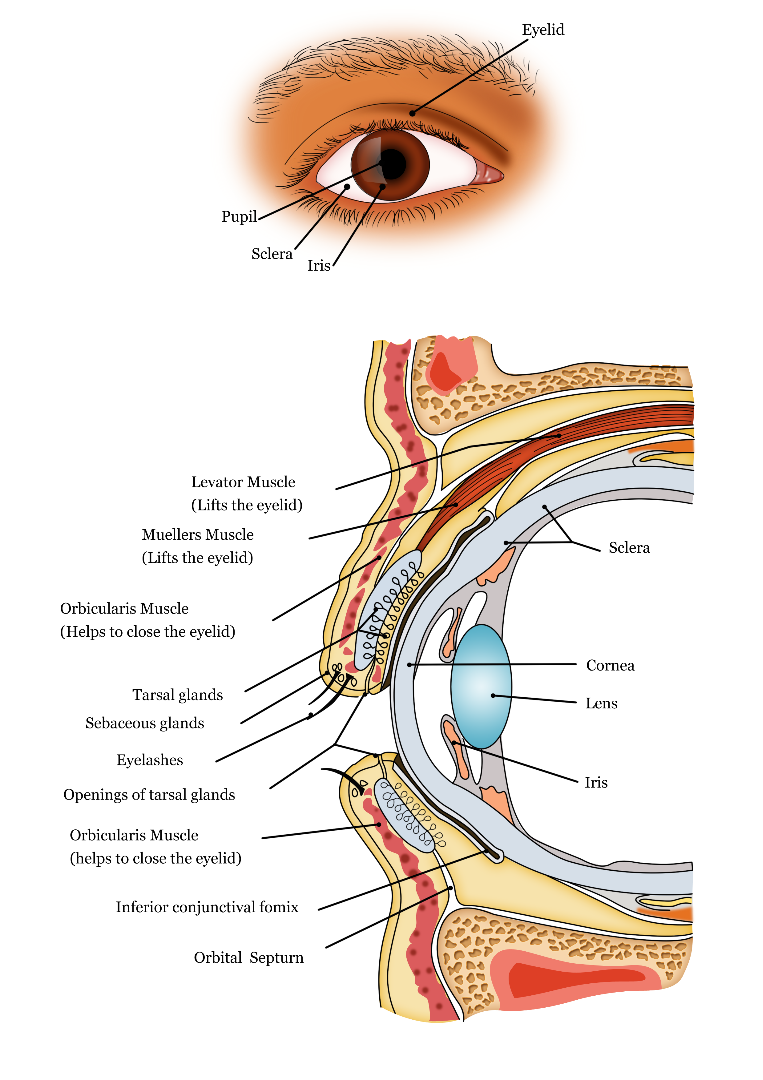
The protective eye-closure reflex can be triggered by touch of the cornea, or by bright light. The sensory input is relayed via the brain stem to the facial nerve (cranial nerve VII) that promotes eyelid closure.
Brain
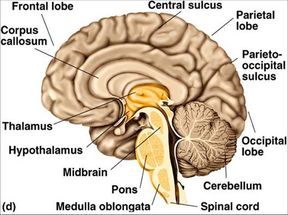
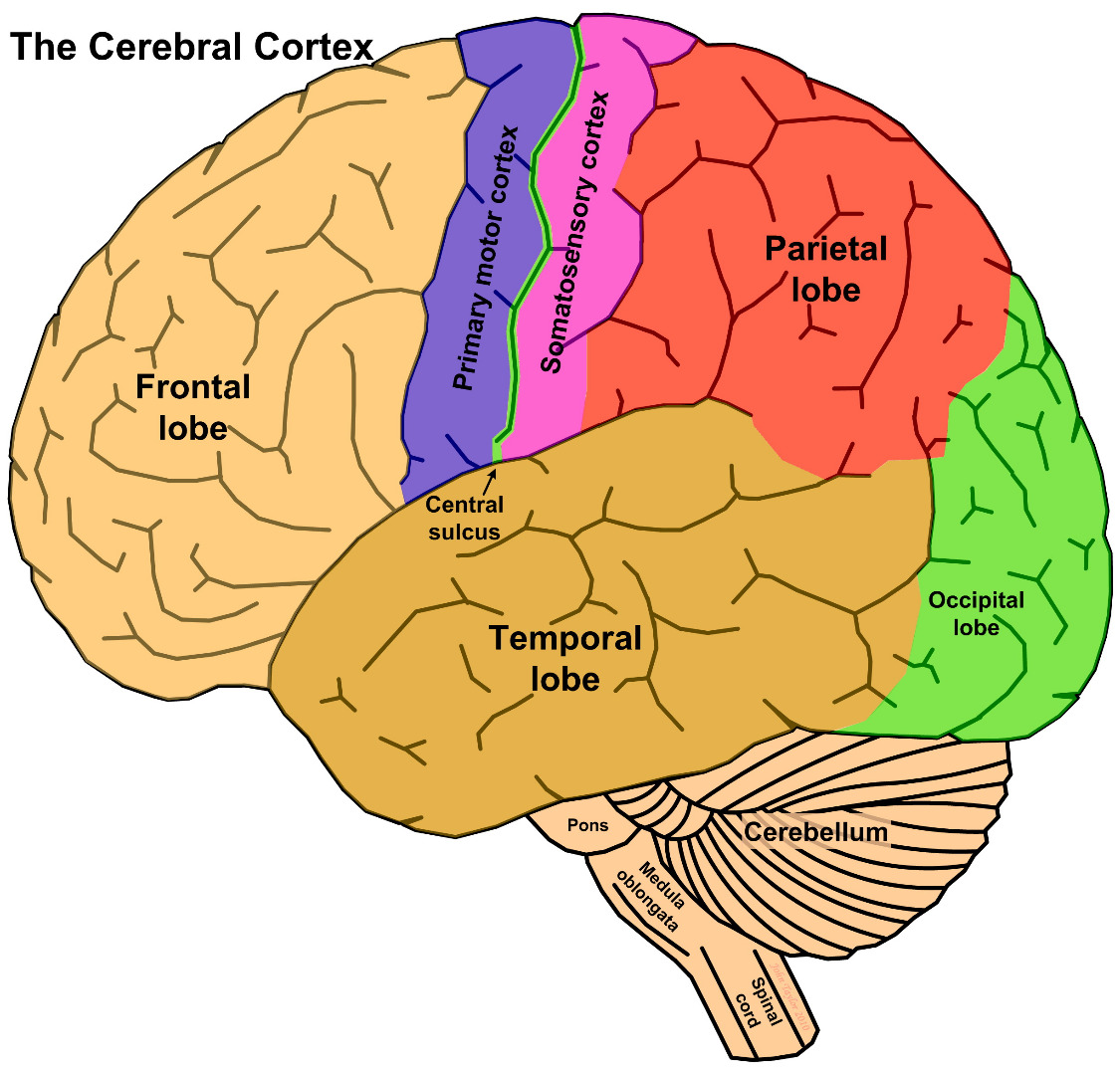
Relay:
1. Cerebral Medulla(-/+) frontal for muscle trophic
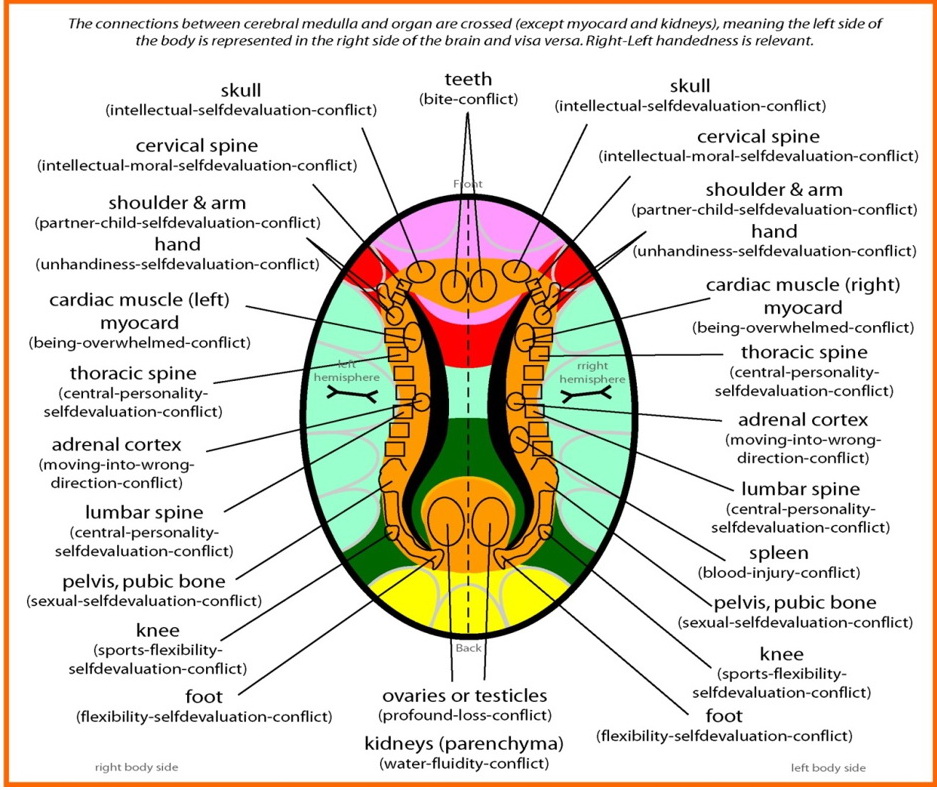
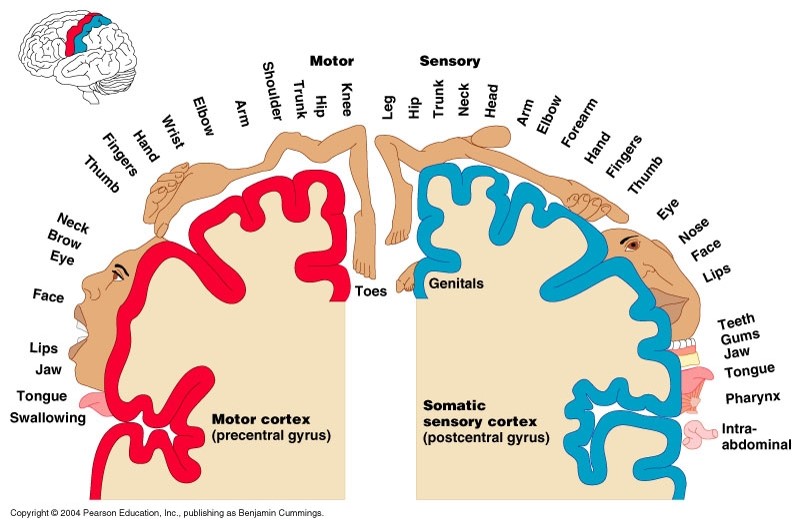
2. Cerebral Cortex (-/+) motor cortex eye area for innervation of voluntary striated muscles
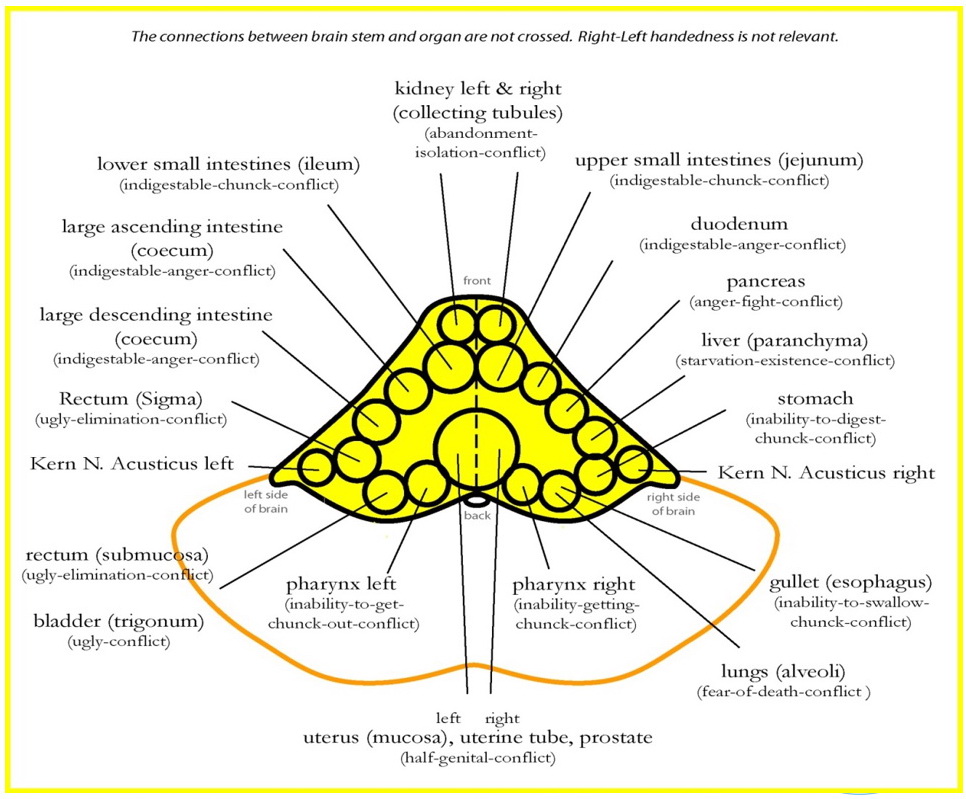
3. Midbrain (+/-) posterior central for involuntary innervation smooth muscle pattern)
compare Brain Stem
Theme:
1. (CM) Visual overwhelm, strain
2. (CC) Not being able to avoid visual stress
3. (MB) Protection of the eye and from visual triggers
Emotions, Thoughts:
Overwhelm, remorse, fear
- I wish I had closed my eyes.
- I wish I hadn´t witnessed it.
- I saw it but I couldn´t help.
- I couldn´t keep my eyes open.
META-Meaning:
- Now, I can decide what to look at.
- I do not need to see everything.
- I forgive myself for seeing/not seeing that.
Organ
Stress Phase Symptoms:
1., 2. Paralysis of M. orbicularis oculi or M. levator palpebrae, hanging eyelid (ectropium or ptosis). The muscles weaken gradually with decreased trophic.
3. (MB): Increased tonus in the tarsal fibres, thereby insufficient lid closure (lagophthalmus).
Regeneration Phase Symptoms:
1., 2. Returning innervation leads to eyelid flutter (tremor). Later, strengthening of the muscle can lead to muscular hypertension and rigidity, especially in a chronic process. A chronically contracted ring muscle creates a lid turned inward (entropium).
3. (MB): Tonus normalization
Healing Peak
Eyelid flutter (tremor palpebrae), spasm in orbicularis oculi muscle (blepharospasm)
Biological Meaning:
1., 2. Strengthening of the function and awareness of the META-meaning by regeneration.
3. (MB): Forced application of the function needed (attention) during stress phase.
Social
Examples:
- A woman has witnessed her brother die in an accident, as well as other scareful events. After the birth of her son, she develops ptosis and blepharospasm in a chronical process by environmental triggers. (Klapp)
- A truck driver fell asleep at the wheel which lead to an accident. He feels guilty that he couldn´t keep his eyes open, or take a rest when due. Afterwards, auditory triggers startle him to open his eys widely.
Additional Information
The skin and muscles of the eyelid are innervated by cranial nerves, which have fibres from brain stem, cerebral medulla and cortex (with their emotional representations connected). The tarsal muscle fibers are innervated by the autonomous nervous system.
Constellations:
Megalomania (Cerebral Cortex relays active in both hemispheres): Visual-attention-Megalomania: “I see everything – nothing can be hidden from me!”
Differential Diagnosis:
Increased sensitivity to light through processes in Iris, Retina or Chorioid influence the need for protection and closure of the eyelids.
Facial nerve (Cranial nerve VII with fibres from Brain Stem, Cerebral Medulla and Cortex) in stress phase (social devaluation fear) or when damaged: paralysis, facial paresis, lagophthalmus (insufficient lid closure)
