
Middle Ear – Ossicles, muscles and cartilage
Anatomy
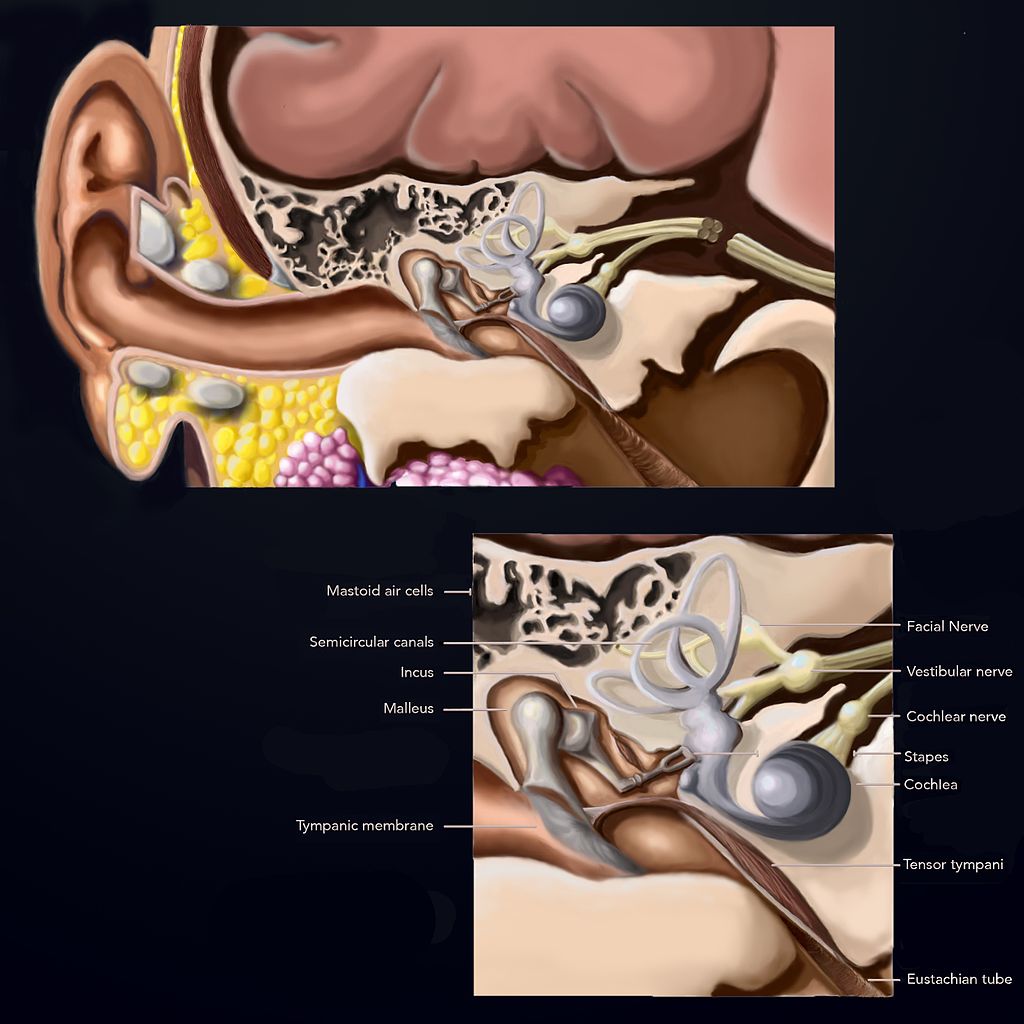
The middle ear contains three tiny bones known as the ossicles: malleus, incus, and stapes. The ossicles are classically supposed to mechanically convert the vibrations of the eardrum, into amplified pressure waves in the fluid of the cochlea of the inner ear).
The auditory ossicles can also reduce sound pressure (the inner ear is very sensitive to overstimulation), by uncoupling each other through particular muscles. The movement of the ossicles may be stiffened by two muscles. The stapedius muscle, the smallest skeletal muscle in the body, connects to the stapes and is controlled by the facial nerve; the tensor tympani muscle connects to the base of the malleus and is under the control of the medial pterygoid nerve which is a branch of the mandibular nerve of the trigeminal nerve. These muscles contract in response to loud sounds, thereby reducing the transmission of sound to the inner ear. This is called the acoustic reflex or Tympanic reflex.
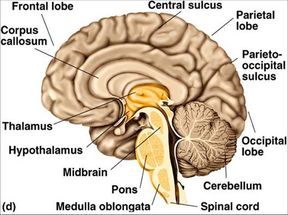
Brain
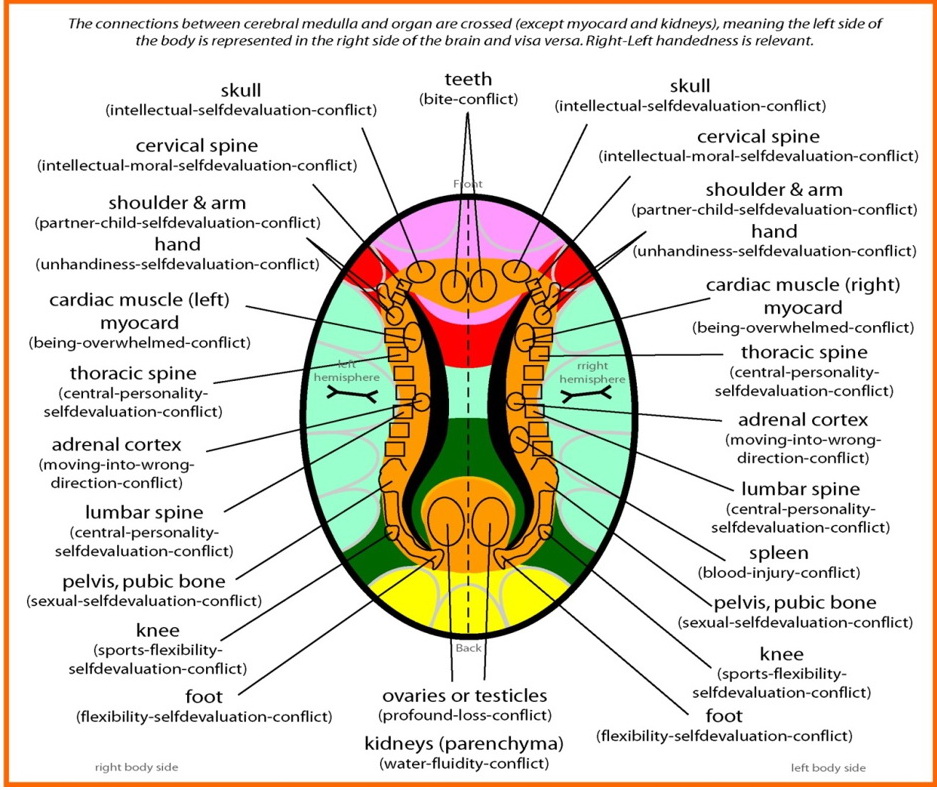
Relay:
1. Cerebral Medulla (-/+) in “skull area”, for ossicles
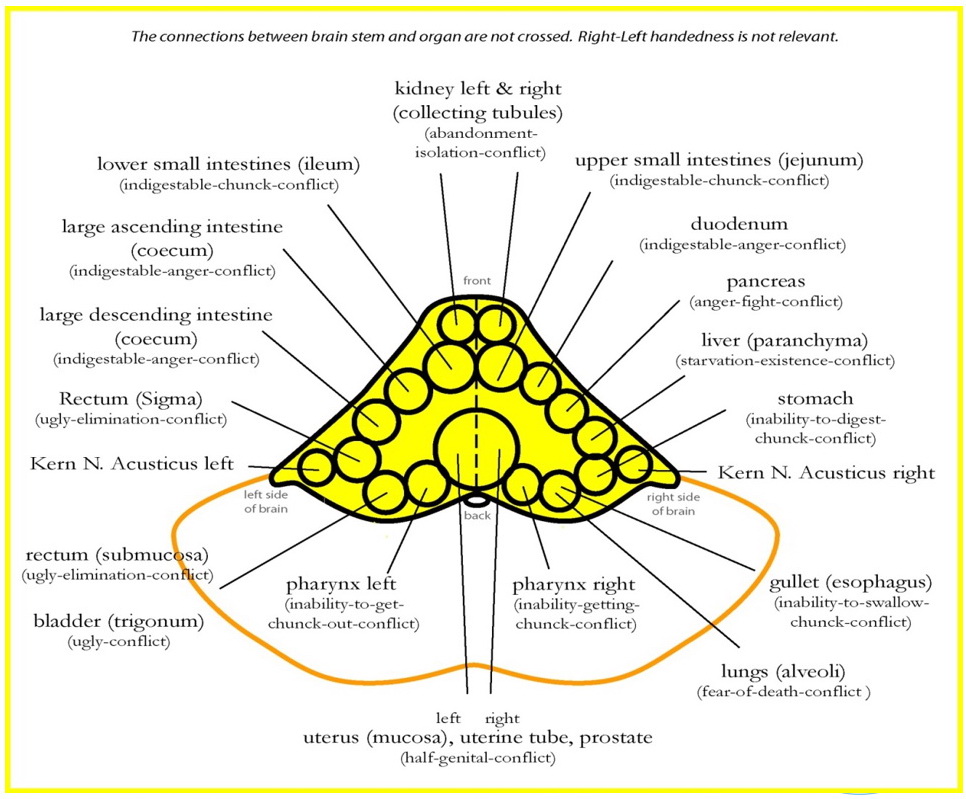
2. Midbrain (+/-) dorso-medial left & right, for the involuntary action of the muscles
compare Brain Stem
Mind
Theme:
1. Not being able to hear sufficiently, self-devaluation
2. Need to protect oneself from sound-trauma
Emotions, Thoughts:
1. Insecurity, frustration
2. Fear, resistance
- I can’t handle what I heard.
- This would have been important for me to hear.
- I didn’t get that!
- This sound was too loud/too soft for me.
META-Meaning:
- My ears catch all the information that I need, and release the others.
- I accept and love my hearing.
Organ
Stress Phase Symptoms:
1. Decrease in trophic and weakening of the structures impair the auditory function.
2. The stapedius muscle is activated by reflex to protect against “sound attacks”, following the Midbrain pattern with it´s tension. The tensor tympani reacts in situations of shock and reduces the impact.
Regeneration Phase Symptoms:
1.Replenishment of the weakened structures comes with swelling and pain, and can be diagnosed as a form of otitis media.
Calcifications in the auditory ossicles (otosclerosis) may appear after the regeneration has completed, especially after repeated conflicts.
Biological Meaning:
1. The biological meaning in Cerebral Medulla lies in the finished regeneration phase with reinforced structures. However, the function is degraded when the lesson is not internalized and the conflicts repeated.
2. The biological meaning of the stapedius reflex is to prevent sound trauma.
Social
Examples:
- An immigrant has difficulty to learn the new language and acquire the necessary information. She experiences this as self-devaluation.
- A teacher is daily exposed to high noise levels in school. She develops otosclerosis with time.
- After hypnosis a woman transforms her hearing and learning challenges for the foreign language into a new flow and confidence – a positive megalomania. (Klapp)
Additional Information
Constellations
Hearing Megalomania: both hemispheres affected – results in exaggerated belief in the own abitities to hear and understand
Differential Diagnosis:
Physical damage of the facial/stapedius nerve can result in a paralysis of the stapedius muscle, creating hyperacuity.
Middle Ear – Tympanic Cavity (Brain Stem +/-): tissue reinforcement, possibly hearing impairment and obstruction of the Eustachian Tube in stress phase (need for information); otitis media and tumour degradation with purulent discharge in regeneration phase.
Inner Ear, Hearing (Cerebral Cortex, -/+, non-organic functional change) Tinnitus in stress phase (unwanted hearing); temporary hearing loss in regeneration phase. Possibly hearing constellation (voices, paranoia, can be manic/depressive if territorial theme).
Inner Ear, Vestibulum (Cerebral Cortex, -/+) vertigo in stress phase (loss of control)
