Penis – Glans and Foreskin
Anatomy
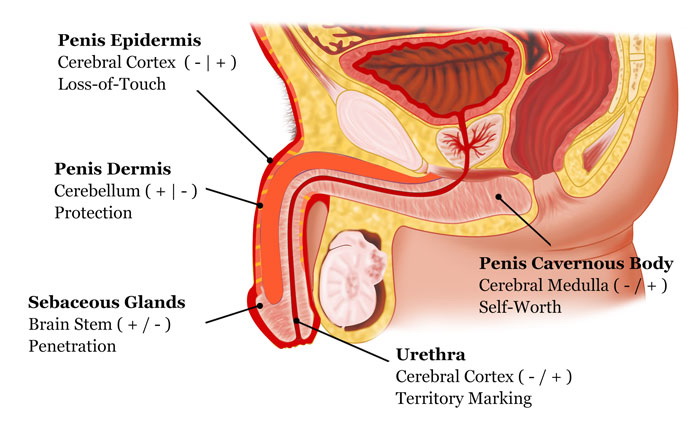
The glans penis is the sensitive bulbous structure at the end of the penis. It consists of the same tissue as the cavernous body, and is covered by a sensitive mucosa. The glans is anatomically homologous to the clitoral glans of the human female. The urethra runs through the glans.
Typically, the glans is completely or partially covered by the foreskin (prepuce), except in men who have been circumcised, though the foreskin can generally be retracted over and past the glans.The prepuce consists of relocatable, self-lubricating inner and outer parts:
- The outer layer consists of epidermis and dermis
- The inner layer is a mucosa with un-keratinized squamous epithelium, which lacks dermis features like collagen fibres, hair follicles, sweat and sebaceous glands.
- The frenulum is a cutaneous fold between glans and mucosa of the foreskin.
Brain
Relay:
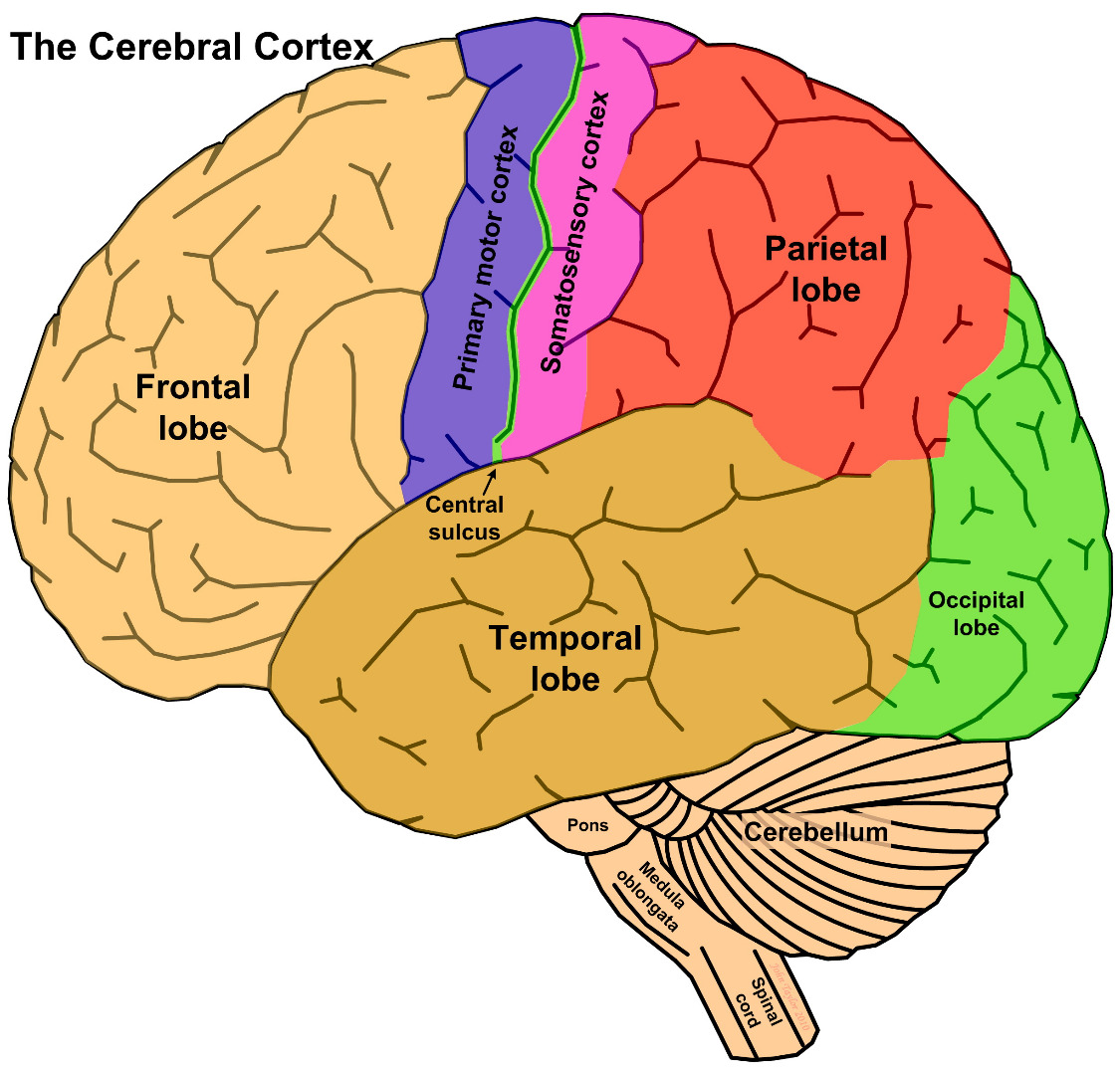
1. Cerebral Cortex (-/+) parietal sensory area left & right for epidermis, mucosa and sensitivity of glans & foreskin
Cut through sensory and motoric cortex areas
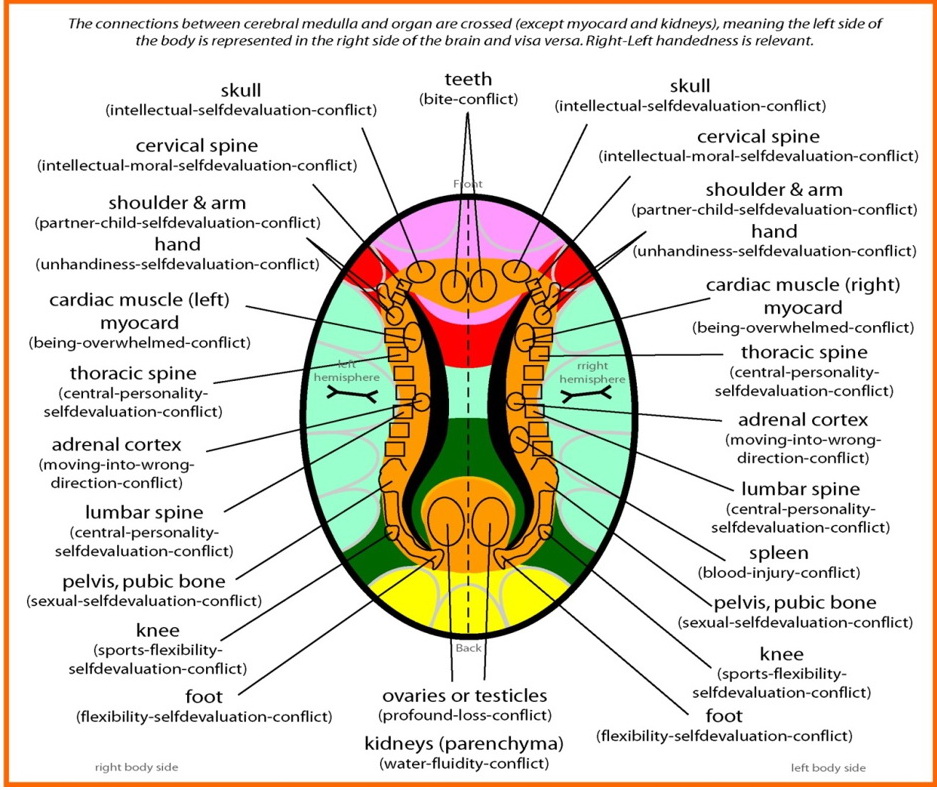
2. Cerebral Medulla (-/+) in pelvis area for frenulum (collagen & elastic connective tissue) and cavernous body of the glans
Mind
Theme:
- Sexual separation or traumatic contact
- Loss of territory or status
Emotions and Thoughts:
Fear, mistrust, sadness
- I need to get her back!
- My position is gone!
- How could she leave me?
- I lost the contact!
META-meaning:
- Now I can decide to open up for being free.
- Now I can decide to open up for feeling the true meaning of love.
- I totally love and accept myself as I am.
Organ
Sensitivity changes according to IS/epidermis pattern with hyperesthesia in regeneration phase
Stress Phase Symptoms:
Reduced sensitivity (hypesthesia) of the penis skin, especially the prepuce, loss of libido, cell atrophy, possibly depressive states.
Possible diagnoses: impotence, syphilis, ulcerative penis carcinoma.
Regeneration Phase A:
Hyperesthesia (oversensitive), painful inflammatory swelling, possibly manic states. Premature ejaculation (ejaculatio praecox) is often due to hyperesthesia of the penis.
Possible diagnoses: balanitis, posthitis, chancre (ulcus dura), penis carcinoma
Healing Peak:
Blackout, short absence
Regeneration Phase B:
Itch, possibly excess proliferation.
Possible diagnoses: genital herpes, HPV, genital warts, chancre (ulcus dura), penis carcinoma
Biological meaning:
The hypesthesia in stress phase reduces the biological and psychological impact of the sexual loss or trauma.
Social
Examples:.
- A man lost his sexual appetite after the separation from his partner. After a new woman entered his life, his libido returns, however he develops genital warts.
- After a sexual assault a young boy loses the sensitivity of the erogenous zones of the penis (reaction of cerebral cortex and cerebellum constellation)
- A young man from religious home was always kept away from sexual stimuli and activities. As he later starts relationships to women, he suffers from premature ejaculation.
Additional Information
In newborn, the inner part of the glans is often agglutinated with the glans (prepuce conglutination), because they separate just after birth.
Circumcision of the foreskin can be therapy for phimosis (narrow foreskin), however it changes sensitivity and texture of the surface in cornification of the glans.
The sensitivity of the penis, as well as the seminal vesicle and the prostate ducts, are connected to conflicts of the coronary arteries intima. In stress phase of a territorial or sexual loss the penis sensitivity is reduced. Depressive states are possible.
Constellations:
Sensory Constellation when sensory relays in both hemispheres are affected, sensitivity is enhanced; sensual dreams/hallucinations possible
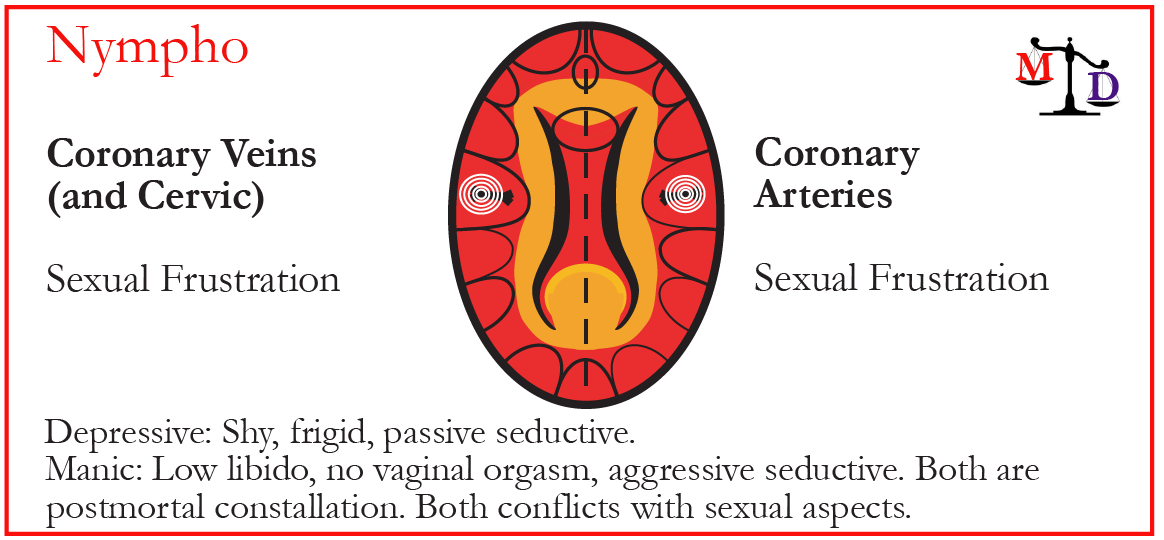
"Casanova" (Seductive): Together with Coronary veins. Both conflicts have a sexual theme. Flirting behaviour and constant search for varying lovers, while physically being hard to arouse, reduced fertility. Manic: active flirting, depressive: shy, passively seducing
Differential Diagnosis:
Penis – Sebaceous Glands (Brain Stem, +/-): in stress phase (protection) increased production of lubricating fat and smegma, in regeneration phase tuberculous discharge (abscess, gonorrhoe).
Penis – Cavernous Body (Cerebral Medulla, -/+) stress phase (sexual self-devaluation): erectile dysfunction, impotency; Chronic: fibrous knots, penisdeviation, pain in erection.
Penis melanoma appears in stress phase of the dermis (CB +/-) after vulnerability conflicts
Urethra (CC -/+) hyperesthesia and burning pain when urinating in regeneration phase (after territory/position-marking)